What makes an AI voice agent survive a real phone line
by Smeron, Product studio
3 August 2026 · 5 min read
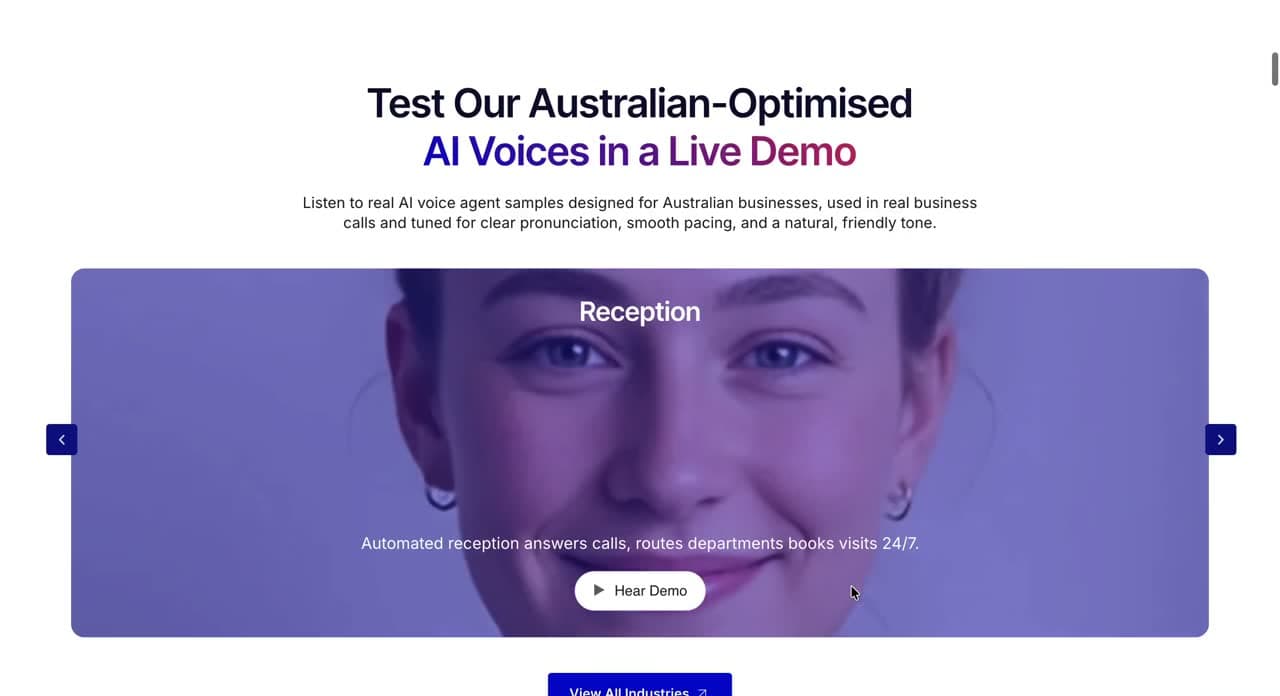
Every AI voice agent sounds good in a scripted demo. The ones that work on a real line are the ones built around the caller's patience rather than the model's capability.
Callease AI sells phone agents to Australian businesses on subscription. Their customer is the clinic, the agency or the trades business that keeps missing calls, and for those businesses a missed call is a lost job that voicemail does not recover. We built the product. Almost everything difficult about it was a timing problem.
The caller is grading the pause, not the answer
A person on a phone call has a very precise sense of how long a reply should take, and it is shorter than most voice pipelines are. Audio has to be captured, transcribed, reasoned over and spoken back, and every one of those stages is a queue somebody could add a hundred milliseconds to. We set the budget at half a second, end to end, and treated it as a hard constraint rather than a target.
Past that, callers assume the line has dropped. They speak again over the agent, which produces two overlapping utterances, which produces a transcript that means nothing, which produces an answer to a question nobody asked. The call is unrecoverable within four seconds and the caller hangs up believing the business is broken.
A caller does not grade the answer. They grade the pause before it.
Interruption is the normal case
Demos are built on turn-taking: the agent speaks, the caller waits, the caller speaks. Real calls are not like that. People interrupt with corrections, they answer a question before it is finished, and they say "no, sorry, the other Tuesday" halfway through a confirmation. An agent that finishes its sentence regardless is instantly identifiable as software, and being identifiable is not the problem. Being unstoppable is.
So the agent yields. Incoming speech cuts the outgoing audio, the partial utterance is kept rather than discarded, and the reasoning step is handed the correction along with what it was already doing. This is unglamorous plumbing and it is most of the difference between a demo and a product.
Configured, not built
The commercial constraint was different from the technical one. Callease sells subscriptions, which means a new customer has to be live the day they sign. If each agent were a small engineering project, the business would be an agency with a software margin, and the fiftieth customer would be as expensive as the first.
Persona, knowledge base and business rules are therefore structures inside the product rather than code: tone and boundaries, the company specifics the agent may rely on, and what it is allowed to promise. Onboarding is a setup task. That single decision is the difference between an agency and a software business, and it has to be made before the first customer, not after the tenth.
The outcome has to land in a calendar
An agent that answers questions well is a nicer voicemail. The one that earns a subscription checks live availability, books the appointment, and writes the lead into the CRM before the call ends. Everything else on the roadmap was secondary to that, because the buyer is not paying for conversation quality. They are paying for the job that would otherwise have gone to whoever answered second.
- Local numbers, provisioned per customer. An unfamiliar interstate caller ID gets answered far less often, which makes it a product decision rather than a telecom detail.
- Every call transcribed and reviewable, so a failing flow is caught the same day instead of at the end of the month.
- One business goal per agent. An agent asked to book, upsell and handle support in the same call does all three badly.
What we would not claim
The pattern worth taking from this: when you are building anything real-time with a model in the middle, the interesting budget is not tokens or accuracy. It is the time a human will wait before they conclude the thing is broken, and every architectural decision gets made inside it.
Questions this comes up with
Where this came from
- The build: Callease AI case study
- The service: AI Software Development
Want this applied to your own stack?
Fifteen minutes with the people who built the thing in this post. No deck.