We automate the repetitive work your team does by hand
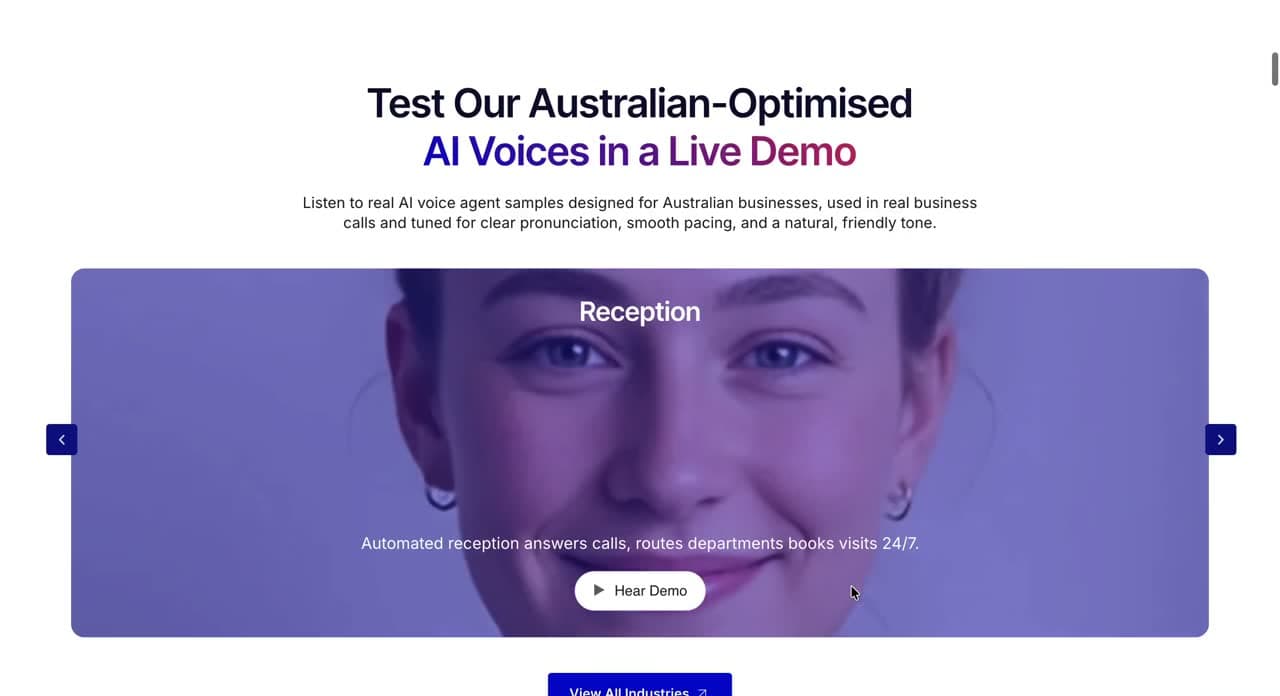
Callease AI — AI voice agents. The full write-up is linked in the proof section below.
Every business runs on work nobody should be doing: copying between systems, chasing the same information, filling in the same forms. If a person can explain the rules in ten minutes, we can build software that does it. Custom, priced to the job, and yours afterwards.
What you end up with
Work that used to need a person now runs unattended
Answers in seconds from data that took a day to assemble
Models and prompts you own, on infrastructure you control
A documented handover, so your team can extend it without us
Start here
The short answer
Smeron builds custom AI software that takes repetitive manual work off a B2B team: copying data between systems, reading and routing inbound email, drafting quotes and reports, chasing information, and answering the same phone calls. There are two ways to start. If you do not yet know where AI fits, the first call is a mapping session — we walk through how work actually moves through your systems and send back a ranked shortlist of what is worth automating and what is not, which you keep either way. If you can already name the task, we skip discovery and go straight to a written scope with one fixed price and one fixed date. Everything ships on the client's own cloud accounts with 100% of the intellectual property handed over.
Two ways in
You do not have to arrive knowing what to automate. Open the one that sounds like you.
We map it with you on the first call
Almost every operation has three or four automatable jobs nobody has written down, because each one is somebody's normal Tuesday.
1One call through the real flow: which systems, which handoffs, who re-keys what into where
2We shortlist the jobs whose rules a person could explain in ten minutes
3Each one ranked by the hours it takes back against what it costs to build
You end up with: A written shortlist you keep either way, including the jobs we think are not worth automating yet.
Skip the discovery, go straight to a number
No workshops and no discovery phase sold as a deliverable. Describe the task and we ask only the questions that move the price.
1Tell us the task. One sentence is enough to start
2One call to see the systems it touches and agree what a correct result looks like
3A written scope with one fixed price and one fixed delivery date
You end up with: A price and a date, usually inside a week. If it is not worth building we say so before you have spent anything.
What we take off your team
The jobs we are asked for most. Recognise one and you are on route 02; recognise none and route 01 is the one that finds yours.
Re-typing data between systems
Order details from an email into the ERP, leads from a form into the CRM, invoices from a PDF into accounting. Read, validated, written, logged — with anything ambiguous held for a person rather than guessed at.
Inbox triage and routing
Inbound mail read, classified and sent to the right person or queue, with the account history already attached. The reply is drafted; a human presses send.
Quoting and proposals
Requirements pulled out of a request, priced against your own rules and rate card, and returned as a draft quote in minutes rather than the next working day.
Reports somebody rebuilds every week
The spreadsheet that gets assembled from four systems every Monday morning, built once as a pipeline that runs itself and flags what changed.
Chasing information
Missing documents, unsigned forms, overdue updates. Followed up on a schedule, escalated when they are not answered, and closed off when they are.
The phone line
Calls answered, qualified and routed by an AI voice agent that survives a real phone line — interruptions, accents and hold music included.
Not on the list? It almost certainly still applies. This is six examples rather than a menu, and the first call is where we say whether a job is worth automating, including when it is not.
What you get
Every item below is scoped, priced and dated before the build starts.
AI voice agents
Human-sounding agents that answer, qualify and route live calls. Built to survive a real phone line — interruptions, accents, hold music and all.
LLM integrations
Language models wired into the CRM, the ticket queue and the document store you already run, with retrieval over your own content rather than a public index.
Decision automation
The repeated judgement calls — scoring, routing, triage, approvals — encoded, logged and reviewable, with a human in the loop wherever a wrong answer costs money.
Predictive analytics
Demand forecasting, churn signals and pipeline projections, built on the data you already hold and shown where the decision gets made rather than in a monthly deck.
Research and reporting automation
Multi-step agent pipelines that gather, verify and write up what an analyst would spend a day on, with every claim traceable to its source.
Evaluation and guardrails
A test set, a scoring harness and refusal paths, so you can tell whether a prompt change made the system better or just different.
Stack
Python
FastAPI
OpenAI
LLM orchestration
Vector search
Next.js
TypeScript
Node.js
Supabase
PostgreSQL
AWS
GCP
Who this is for
And who it is not for. Both halves are worth reading before booking anything.
A good fit when
You have a workflow that eats hours every week and follows rules a person could explain in ten minutes.
You already hold the data the model would need — tickets, transcripts, documents, historical decisions.
Someone senior on your side can say what a correct answer looks like, because that is what an evaluation set is made of.
You want it running on your own cloud accounts rather than inside somebody's platform.
Not a good fit when
You want AI in the product because investors or competitors have it. There is no workflow to point at, and the build will not survive contact with a budget review.
The data that would make it work is locked in a system nobody will give access to. That is a procurement problem and no amount of engineering fixes it.
A wrong answer is catastrophic and there is no appetite for a human in the loop. Some decisions should not be automated, and we will say so on the call.
You need it live in three weeks. Scoping alone is two, and a rushed evaluation harness is worse than none.
How the engagement runs
The same three phases on every engagement. What changes is the work inside them.
01
Scope and architecture
Two weeks. We find the one workflow where AI pays for itself first, write the scope with a price and a date on it, and design the data path before anyone writes a prompt.
02
Build and deploy
Senior engineers only, shipping to your cloud accounts from week one. You see working software on a staging URL, not a status report.
03
Measure and scale
The evaluation harness tells us what to tune. Once the first workflow holds, the second one costs a fraction of the first because the plumbing is already there.
What it costs
There is no price list and no tier to squeeze your idea into. Describe what you want the software to do and we come back with one number and one date.
If you can think it, we can build it.
Custom AI build
Priced to the idea
Any workflow, any integration. Scoped in days, not months, and quoted as one fixed number.
A scoping call and a written scope inside a week
One fixed price and one fixed delivery date
Senior engineers only — no juniors billed as seniors
Built on your cloud accounts from the first deploy
Evaluation harness so changes can be measured, not guessed
100% of the IP, handed over documented
Most first builds are one workflow. Start with the one that pays for itself.
Monthly AI pod
Month to month
For a roadmap of AI work rather than a single build. The same senior team, continuing after the first workflow ships.
A dedicated team, not a ticket queue
Scale up or down on a month's notice
Everything built so far stays yours
What moves the number
01How many systems it has to integrate with. This is almost always the largest line, and it has nothing to do with the AI.
02Whether the data is already accessible, or has to be extracted, cleaned and kept in sync.
03How much a wrong answer costs, which sets how much evaluation and human-in-the-loop review the build needs.
04Live voice or asynchronous text. A real phone line has a latency budget and an interruption model that a chat interface does not.
Custom build vs an off-the-shelf AI platform
If your process is standard and your volume is modest, buy the platform — it will be live next week and cost less. This compares the two honestly at the point where that stops being true.
Custom build vs an off-the-shelf AI platform. If your process is standard and your volume is modest, buy the platform — it will be live next week and cost less. This compares the two honestly at the point where that stops being true.
Compared on
Custom build
Off-the-shelf platform
Time to live
Weeks. Two of them are scoping before anything is built.
Days. This is the platform's real advantage and it is a large one.
Fit to your process
Built around the workflow you actually run.
You adapt the workflow to the product's assumptions.
Cost shape
One-off build, then usage-based running costs on your own accounts.
Per-seat or per-minute licence, forever, rising with volume.
Integration depth
Talks directly to your CRM, ticket queue and database.
Whatever the connector catalogue supports, at the depth it supports it.
Ownership
Code, prompts and evaluation sets are yours. No licence in the way of your data.
You own your data. The system that acts on it is theirs.
When it is the right call
Volume is high, the process is specific, or the integration is the point.
Process is standard, volume is modest, and speed matters more than fit.
Work we have shipped
AI Software Development we have already built, with the full write-up on each.
The ones that come up on every first call about this, answered here so the call does not have to.
If you can name the task in one sentence, take the second route and skip discovery. If you know time is being wasted but cannot point at the job, take the mapping session first. Nobody is penalised for guessing wrong: the first call establishes which of the two you are in the first ten minutes, and we switch.
No. It is one call plus a written shortlist you keep whether or not you build any of it with us, and it includes the jobs we think are not worth automating yet. We do it free because a ranked shortlist is the only honest way to price the work that follows, and because a client who automates the wrong process first does not come back.
A first production workflow is scoped as a fixed-price build, and we put the number in writing after a two-week scope rather than guessing on the call. The scope itself is the smallest piece of work that proves the case, so you are not committing to a platform before you have seen one thing work.
Both. Most builds start on a hosted model because it is the fastest route to something real, and the orchestration layer is written so the model behind it can be swapped for a self-hosted one when data residency, cost per token or latency makes that the better trade.
You do — 100% of the intellectual property, including the prompts, the evaluation sets and the pipeline code. It runs on your cloud accounts and your database from the first deploy, so there is no per-seat licence sitting between you and your own data.
Retrieval over your own content, a scoring harness that runs on every change, and explicit refusal paths for questions the system should not answer. Anywhere a wrong answer costs money, a person approves the action rather than the model executing it.
Two weeks of scoping, then a matter of weeks to a version handling live calls on a narrow set of call types. What extends it is not the voice layer but the systems it has to read from and write to — a agent that only answers questions is fast, one that books, reschedules and updates a CRM is a real integration project.
Yes, and it is a common starting point — most of this work begins with a prototype that impressed everyone in a demo and then stalled on reliability. The first job is usually an evaluation harness, because until you can measure whether a change made it better, nobody can safely ship one.
The other three
Most engagements start with one of these and grow into a second.